
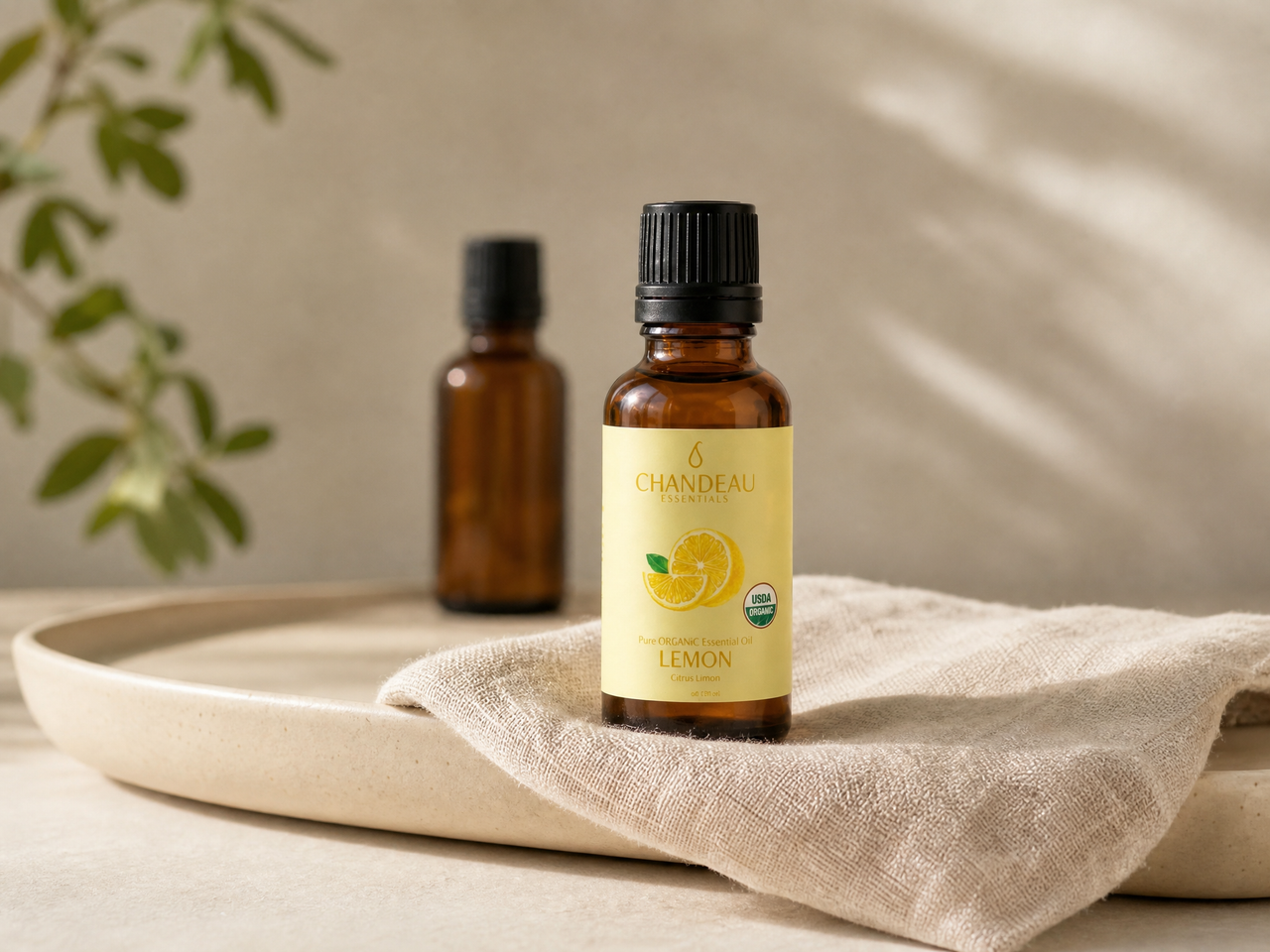
What Does USDA Organic Mean for Essential Oils — the Label, Read Slowly
You're standing at the counter, bottle in hand. The light is low. You turn it once, and there it is — the small green seal. The question that follows is quiet but real: what does USDA organic mean for essential oils, exactly, when the thing in the bottle is going to end up in the air you breathe.
The Seal, the Bottle, the Counter
It's a small moment. Kitchen counter, late afternoon, the diffuser already humming in the next room. You're choosing between two bottles and one of them carries the seal. The other doesn't say much at all.
USDA Organic is a federal standard, run through the National Organic Program, and it follows a plant from the field through every step until it's sealed in glass. No synthetic pesticides on the soil. No chemical fertilizers. No GMOs. No irradiation. An independent certifier inspects the farm, the distiller, and the bottler, and the paper trail has to hold. That's what the seal is — a verified chain of custody, not a marketing word. It doesn't promise the oil will smell a certain way. It promises what didn't touch the plant on the way to you.
What the Seal Means When You're Diffusing It
Morning. The window cracked. Coffee on, and the diffuser running a few drops of orange and rosemary while you move through the first hour. The scent is bright and uncomplicated. It reads as morning.
This is the moment certification quietly matters. When an oil is diffused, the plant is in the air around you — the same air settling on the counter, on the linen, on the cup. This three-oil morning set — Orange, Rosemary, Lemon, in the cream box — carries the seal on every single bottle, which means the citrus peels were grown without synthetic spray and the rosemary came off soil that wasn't treated. The box sits next to the diffuser. You reach for it without thinking. If you want to read the small print first, the Calm Morning bundle page lists each oil and its origin.
What the Seal Doesn't Test For
Worth saying plainly. USDA Organic is an agricultural standard. It governs how the plant was grown and handled — not how the finished oil smells, not its chemical composition, not its therapeutic profile. There's no scent grade attached to the seal. A certified organic lavender and a conventional lavender can sit side by side and smell different from each other for reasons that have nothing to do with certification — soil, altitude, harvest time, distillation pressure.
So the seal is one part of the picture. The other part is the oil itself: where it was grown, how it was distilled, what it smells like in your room. The USDA organic standards set the floor for the agricultural side. The rest is what you notice when you open the bottle. A single bottle of certified Eucalyptus, for instance — the kind that goes into the Quiet Reset bundle — reads cool and sharp in a small bathroom, and that quality comes from the leaf, not the label.
Giving the Bottle, Not the Explanation
When you hand someone a small box of certified oils, you're not handing them a wellness story. You're handing them three bottles that will sit on a shelf and quietly change the air of a room. The seal is the part that doesn't need explaining at the kitchen table. It's just there, on the back of the bottle, the way you'd want it to be. A housewarming, a first apartment, an afternoon with no occasion attached. The box is small. The gesture is too.
Back to the counter, bottle still in hand. You set it down. The diffuser keeps running in the next room, the citrus settling into the air the way it does on slow mornings. If it's the cream box you're after, the Calm Morning set is where the seal and the scent meet.