
What Does USDA Organic Certification Mean for Essential Oils — the Label, Read Slowly
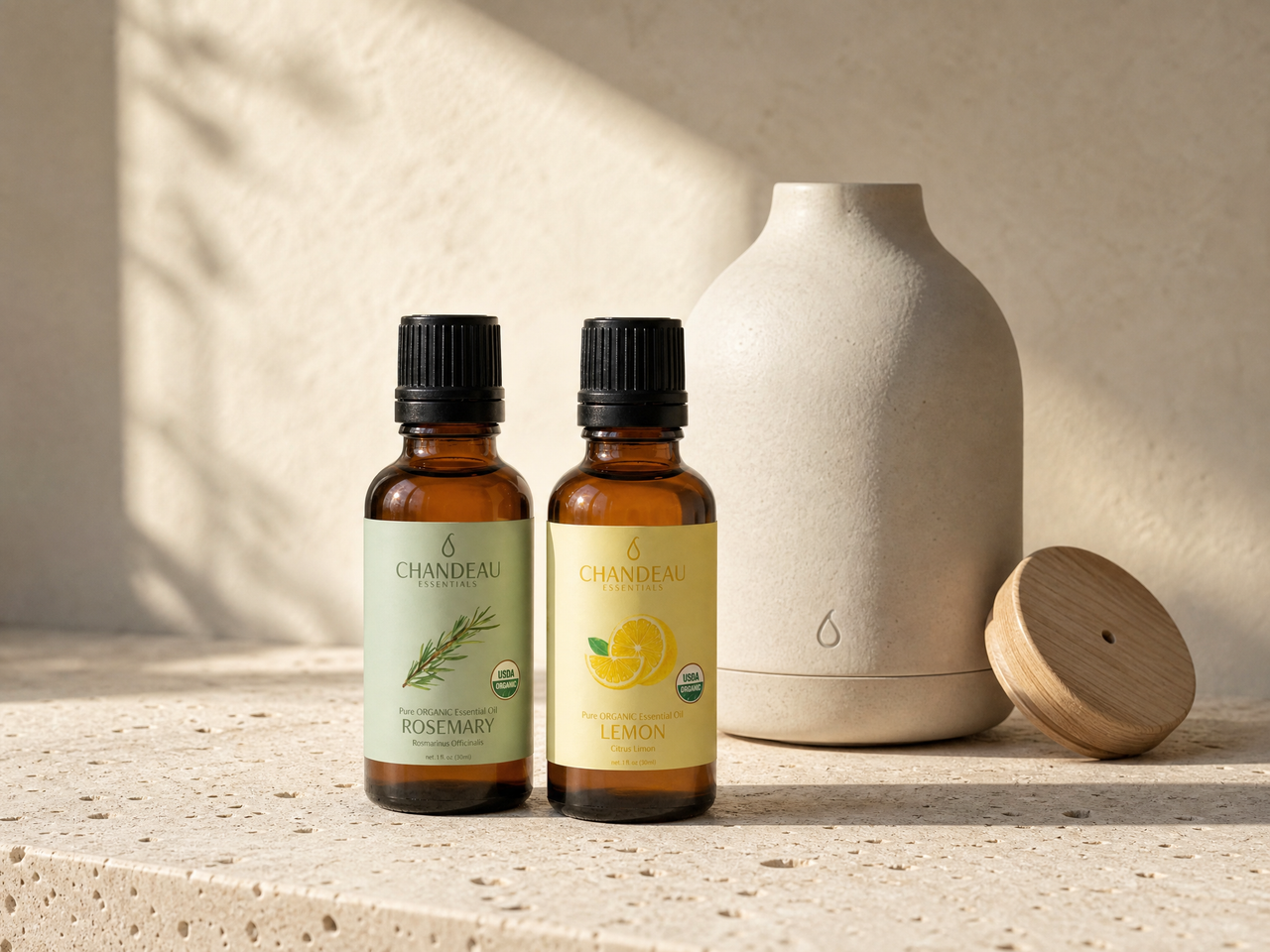
Two small bottles on the counter. One says organic. One says USDA Certified Organic. The diffuser is already half-full of water, the lid off, and the question pauses your hand mid-air. What does USDA organic certification mean for essential oils, actually — and is the difference real enough to choose between them at seven in the morning.
The Pause Before the First Drop
It's a quiet kind of scrutiny. The kettle is on. The living room is still cool from the night. You're about to put something into the air you'll breathe for the next four hours, and the label suddenly matters more than it did in the shop.
The word organic, on its own, isn't regulated the way most people assume. USDA Certified Organic is. It's a federal program run by the National Organic Program, and it verifies the entire chain — the soil the plant grew in, the practices on the farm, the handling of the harvest, the processing of the oil. You can read the program's own framing on the USDA Agricultural Marketing Service site, and what stands out is how much of it is about what wasn't used. No synthetic pesticides on the field. No prohibited fertilizers. No irradiation. No GMO inputs. The seal is a paper trail, walked backward from the bottle to the ground.
What the Seal Actually Sits Behind
The bottle that goes into the diffuser at the start of the day — lemon, or rosemary, or sweet orange — carries the seal because every step before it was documented. This three-oil morning set is built around that paper trail. Orange, rosemary, lemon. Cream box. The kind of scent that reads as morning without announcing itself.
What USDA Organic does not test for is scent quality, therapeutic claims, or the subjective character of the oil. It isn't a grading system for aroma. It's a verification of method. So when the first drop falls from the cream-boxed morning trio into the water, what the certification has protected is the field, the harvest, the handling — not a promise about how the oil will smell or feel in your room. That part is for your nose to decide. The seal just tells you what wasn't in the soil.
Reading the Bottle, Reading the Difference
A bottle that says organic without the USDA seal might still be grown well. It might not. There's no shared definition holding the word in place. A bottle with the seal has been audited by a third-party certifier accredited by the USDA, and the operation has to recertify every year. As New Directions Aromatics notes in their breakdown of organic sourcing, the certifier looks at everything from the seed to the storage drum.
For a diffused oil, this matters in a specific way. You aren't applying it to skin. You're sending it into air you'll breathe for hours. The certification doesn't make the oil safer in some absolute sense — it confirms what the plant was and wasn't exposed to before it became the bottle in your hand. If you want to extend that same standard into the evening hours, the evening set carries the same paper trail. Lavender, orange, eucalyptus. Quieter on the nose.
The Habit of Reading Labels Slowly
Once you've stood at the diffuser and actually looked at the seal, you tend to keep looking. At the small green-and-white circle. At the certifier's name on the back. At the country of origin. It becomes part of the gesture — uncapping the bottle, checking what you already trust, letting the drop fall. Not a ritual exactly. Just a habit of paying attention to what enters the room.
Two bottles on the counter. One labeled organic. One labeled USDA Certified Organic. Now you know which paper trail sits behind which word, and the choice gets quieter. The morning trio is already on the shelf. The first drop falls.