
Best Essential Oils for Living Room Diffuser — Bright, Not Loud, Not Sweet
The couch pillows are straight. The books on the coffee table are stacked the way you like them. But the room still reads as neutral — clean, maybe, but not quite finished. Choosing the best essential oils for a living room diffuser is the same instinct as adjusting the lamp or opening one window halfway. It is the last quiet decision before the room feels like yours.
What a Living Room Scent Has to Do That a Bedroom Scent Does Not
A bedroom can smell like whatever you want. It is private. It answers only to you. The living room is different. It is the room that has to hold a Saturday morning with coffee and also a Tuesday evening with someone you just invited over. The scent in this room cannot be polarizing. It cannot lean too floral or too herbal or too heavy. It has to sit in the middle of the air like good lighting — present, but not the subject of conversation. When reviewers at The Good Trade evaluate diffusers for shared spaces, they note how much the room itself shapes what works. Square footage, airflow, the hour. The oil matters as much as the machine. Maybe more. A diffuser is just the delivery. The scent is the thing people actually remember when they walk through your door.
Orange, Rosemary, Lemon — and the Room They Make
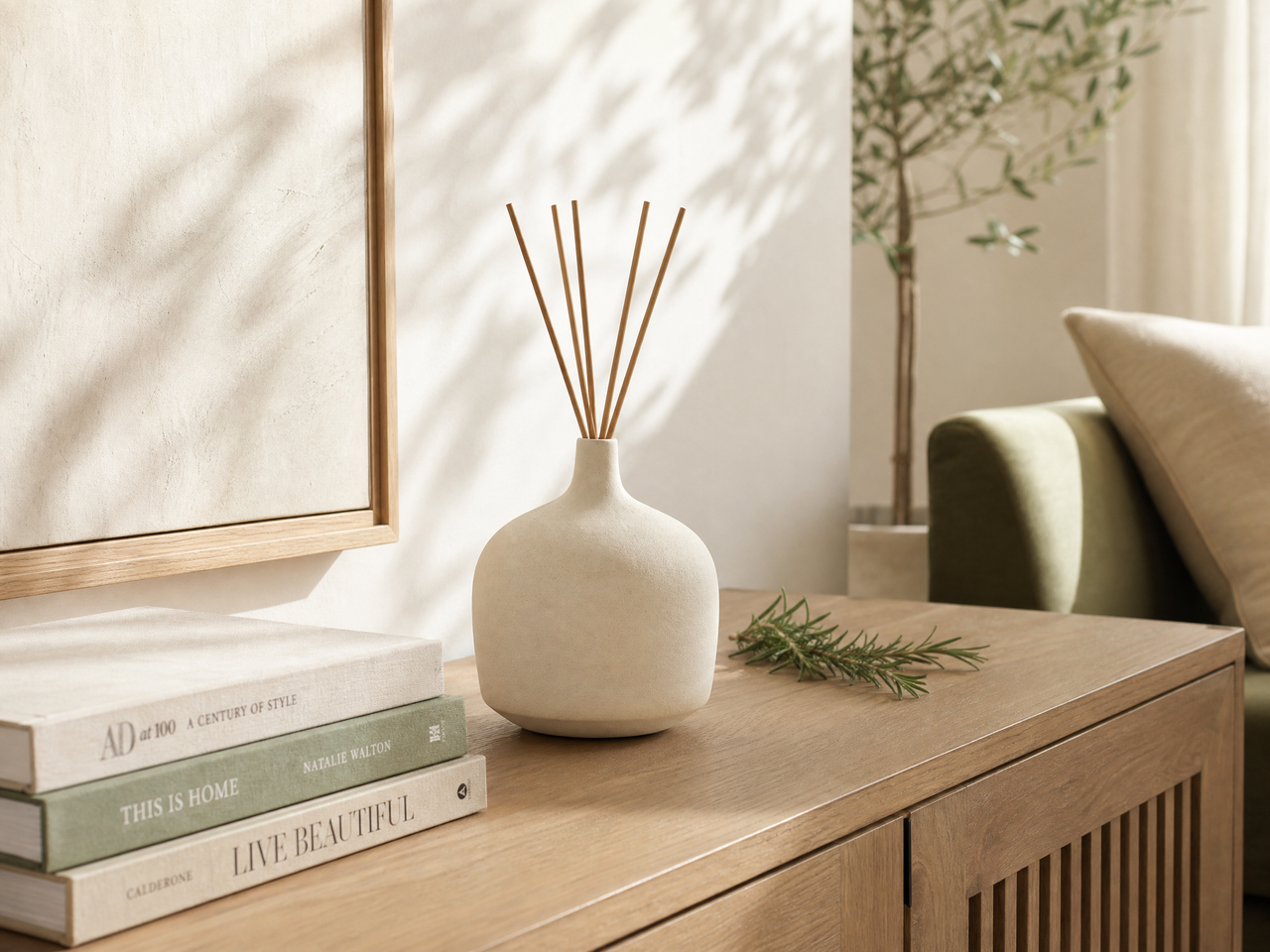
There is a version of your living room that smells like a clean kitchen in a warm country. Not perfumed. Not manufactured. Just bright and a little herbal, the way a wooden cutting board smells after you have sliced citrus on it and wiped it down. That is close to what the Calm Morning bundle does to a room. Orange leads. Lemon sharpens the edges. Rosemary keeps it grounded so it does not drift into candy territory. Two or three drops of each in a diffuser on the console table, and the living room reads as intentional without reading as staged. It is a good scent for an open floor plan — it carries without concentrating. And it works whether you are hosting four people or sitting alone with a glass of something cold. This three-oil set was built for rooms that belong to more than one mood.
Choosing Oils for a Shared Space — What to Look For
Organic oils diffuse differently than synthetic fragrance oils. They are less aggressive. They do not coat the back of your throat or compete with dinner. That matters in the living room more than anywhere else, because this is the room where scent meets food, meets other people's preferences, meets whatever is coming through the open window. Look for oils that are single-note or close to it. Citrus. Clean herbs. Eucalyptus if the room runs warm — it reads cooler than it actually is. Reviewed recommends keeping diffuser sessions short in larger rooms and adjusting oil quantity to the space rather than running continuously. For evenings when the living room shifts mood — lower light, a different tempo — something like the Soft Evening bundle with lavender and orange gives the same room a second register without clashing with what came before.
When Someone Walks In and the Room Already Feels Ready
There is a particular kind of effort that looks effortless. Fresh flowers on the table. A candle you did not light yet but placed on the shelf anyway. The diffuser running low in the corner, filling the first few feet of the entryway with something clean and bright. It is not decorating. It is not a ritual. It is just the room, done. The scent is part of the furniture now. Quiet enough to forget. Specific enough to notice when it is gone.
The living room asks more of a scent than any other room in the house. It has to welcome without trying. The best essential oils for a living room diffuser are the ones that feel like they were always there — part of the light, part of the air. The Calm Morning bundle does that. Bright, uncomplicated, and gone by the time you stop thinking about it.